When “Budget-Friendly” Test Equipment Isn’t: A Procurement Manager’s Honest Take
Posted on 2026-08-31 by Marcus Feld
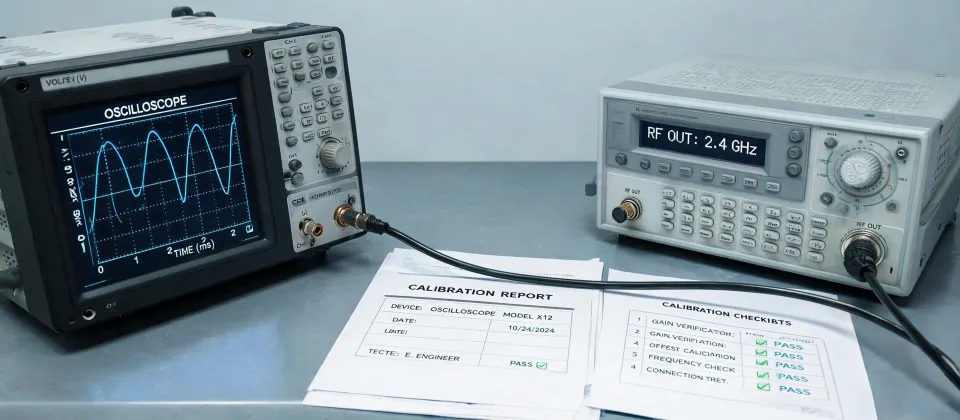
I manage equipment purchasing for a mid-sized testing laboratory—roughly $450,000 in annual instrument and supply spend across eight vendors. When I took over procurement in 2020, I thought the job was simple: compare quotes, check specs, buy the thing that meets requirements at the lowest price. The math felt clean.
Then I started getting deeper into precision instrument purchases. And I realized the math was anything but clean.
The Surface Problem: Budget Pressure Makes Price the Default
It always starts the same way. An engineering manager sends me a request: “We need a new spectrum analyzer.” I check the budget. There’s a cheaper model available. The specs look similar on paper. The vendor tells me it’ll handle 90% of what the team needs.
My savings on that kind of swap? Maybe $4,000. That looks good in a procurement report.
But here’s the thing about precision instruments: the specs sheet describes what equipment does under ideal conditions. It doesn’t describe what it’s like to operate for three years in a real lab. It doesn’t tell you about calibration drift, software quirks, or what happens when you need technical support at 4:47 on a Friday afternoon.
I’ve sat in meetings where finance asks, “Can you squeeze the vendor?” I’ve pushed for more affordable alternatives because I thought that was my job. And honestly, it is—partly. But an incident in 2023 changed how I see it.
The Deep Problem: Instruments Are Trust Infrastructure
What most people don’t realize is that test and measurement equipment isn’t just a tool. It’s the foundation for every claim your company makes to the outside world.
Think about how the chain works:
- An engineer validates a product using a spectrum analyzer. If that instrument drifts or picks up spurious signals, the validation is meaningless. Clients assume the data is accurate because you signed it.
- Your lab runs samples on an HPLC system. The results become quality certificates. Clients don’t see the instrument—they see the report. But the report is only as trustworthy as the instrument behind it.
- Even something as practical as reading a Sensus digital water meter correctly—knowing which digits indicate flow rate versus total consumption—matters when you’re billing clients for utility usage. Get that wrong, and your invoices lose credibility.
The pattern is simple: your clients judge you by your outputs. And your outputs are only as solid as your measurement inputs.
Here’s something vendors won’t tell you: the first quote you get for a premium instrument is rarely the final configuration. Tektronix, for instance, publishes list prices for their spectrum analyzers, but real value sits in the probes, software licenses, calibration plans, and training that go alongside the hardware.
But the inverse is also true. The cheapest quote is never the total cost. When you buy a budget instrument, the real price includes the engineering hours spent figuring out why readings don’t match expectations. The lab time rerunning tests that produced questionable data. The rework when a client pushes back on measurement uncertainty. Sometimes it even includes the relationship itself.
That’s the deep issue. Not that low-cost gear is inherently bad, but that measurement quality is business quality—and the connection stays invisible until something fails.
What Bad Measurement Actually Costs
To be fair, every instrument has a tolerance. Even a top-end Tektronix spectrum analyzer has specified uncertainty limits. But there’s a difference between declared uncertainty and unpredictable unreliability.
In 2023, our lab bought a budget-friendly HPLC system. The invoice savings were about $30,000 compared to the established option. I’m not going to name the brand, because this isn’t about trashing them specifically. The solvent compatibility matched our protocols. The flow rate specs were within range. On paper, it was defensible.
In practice, retention times drifted by 2–3% between runs. Not dramatic. But in analytical chemistry, that’s enough to make peaks unidentifiable in complex sample matrices. Our analysts spent six weeks troubleshooting before they found the problem.
Six weeks of lost productivity. Method revalidation. A pending client audit that almost got delayed. The $30,000 savings? Gone. Probably more than gone once I account for overtime and the credibility hit with an account that noticed the schedule slipping.
And the softer cost was worse: the lab team started second-guessing every result. That’s the slow poison.
I remember approving a Tektronix spectrum analyzer purchase in early 2024. The RF lab had complained for months about intermittent spurious readings on an older unit. The replacement cost was around $15,000 including probes and software—though I might be misremembering the exact figure. I hesitated at first. Then I thought about the HPLC mess.
The instrument isn’t hardware. It’s a promise you make to every client whose product you touch: you can trust these numbers because we don’t cut corners when it comes to measurement.
The best part of that decision? When I told the RF lab lead, he just said, “Finally.” One word. That told me more than any spec comparison ever could.
The Practical Side: What “Quality” Means in Procurement Terms
I’m not saying every purchase needs to be premium. For basic lab consumables and office supplies, a mid-range option is perfectly fine. But for precision instruments, I’ve learned to evaluate four things:
Calibration documentation and support. A Tektronix unit comes with documented calibration procedures and a support network that actually answers. Their educational materials on measurement fundamentals are the kind of resources engineers genuinely reference. That’s not marketing. That’s infrastructure.
Total cost over three to five years. Consider maintenance, downtime probability, revalidation costs, and training. A cheap instrument can become expensive very quietly.
Application expertise. When your team hits a strange measurement question, who answers the phone? Vendor application engineers can be the difference between solving a problem in a day versus a week.
User trust. If the engineers who run the equipment don’t trust it, they’ll re-test everything twice. That hidden labor cost alone can eat a price difference.
I should add that I’ve seen the inverse too. In 2022, I ordered a slightly cheaper centrifuge instead of our usual Eppendorf 5424. The specs matched. The rotor was compatible. I thought I was being a smart buyer.
What I didn’t account for: temperature uniformity in that unit sat right at the tolerance edge. Temperature-sensitive samples trended toward the warmer side. We had to discard an entire assay batch and rerun everything. The lab manager still brings it up—not the brand, just the fact that I cut corners on a piece of equipment where consistency mattered more than the price tag.
What I’d Tell Another Buyer
If you’re an administrative buyer about to place your first big instrument order, here’s what I wish someone had told me:
Start from the output, not the input. Ask what the instrument results are used for. If they go into client-facing reports, regulatory filings, or product validations, quality is non-negotiable.
Question the sticker-price equation. A cheap instrument can become a five-figure problem if it produces questionable data for an important client. A premium option looks different when you factor in calibration records, reliability, and resale value.
Talk to the people who’ll use it. Procurement is a coordination role, not a solo one. The engineering team knows the practical differences—UI quirks, workflow friction, edge cases—that never appear in a datasheet.
Build relationships with a few trusted vendors. Once you’ve proven you’re a reliable customer, there’s usually room to negotiate. Not always on the unit price, but on bundled accessories, extended warranties, or training hours. That relationship is worth more than squeezing the best quote on a single PO.
The Bottom Line
The biggest procurement mistake I’ve made in five years wasn’t picking the wrong line item. It was treating precision instruments like commodities when they’re not.
Test equipment—spectrum analyzers, HPLC systems, centrifuges, even utility meters—sits at the boundary between your company and the outside world. The data it produces is how clients see you. It’s how you demonstrate competence. It’s how you keep promises.
Is the premium option always worth it? Sometimes. Depends on context.
But for equipment that generates the data your reputation depends on, quality isn’t an upsell. It’s the point. Cheap measurement, expensive lessons. That part, I’m sure about.
Marcus Feld
Marcus Feld is an electrical test and measurement analyst specializing in multimeters, oscilloscopes, clamp meters, insulation testers, spectrum analyzers, and data loggers. He applies IEC 61010-2-030 and IEC 61010-031 concepts while examining measurement category, bandwidth, true-RMS response, input loading, and stated uncertainty. His work helps maintenance engineers and test teams choose safe instruments with performance suited to the signals and environments they actually measure.
Leave a technical comment