Tektronix Multimeter, Used Tektronix Oscilloscope for Sale, and Thermal Cameras: A Buyer's Checklist
Posted on 2026-09-07 by Marcus Feld
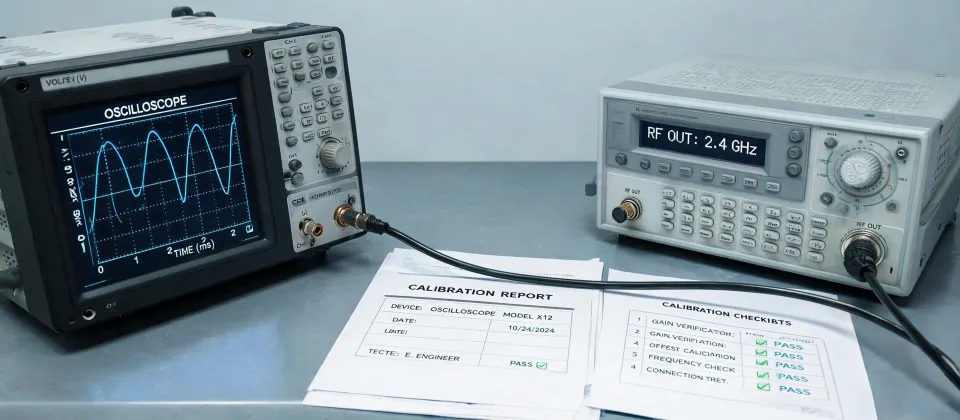
If you're considering a used Tektronix oscilloscope for sale, start with calibration and support documentation, not with the sticker price. I've been the person who approves test equipment orders for a 40-person R&D and repair lab since 2021, and nearly every expensive mistake I've seen came from skipping that step. A Tektronix multimeter can be a great bench investment. A thermal camera can be a great field investment. But none of it is worth the risk if you can't prove it measures correctly or if the vendor can't service it.
The short version: For a bench in a design lab, I'm comfortable recommending a Tektronix multimeter and a used Tektronix oscilloscope when the calibration paperwork is current. For technicians climbing under panels, I'd buy a proper handheld multimeter and clamp meter for the task, even if that means another brand. For thermal imaging, the Fluke vs FLIR thermal cameras question should be driven by reporting workflow, temperature range and ease of use, not by which one won a spec-sheet comparison.
Why my opinion is worth something
I don't design circuit boards. I'm the office administrator who manages vendor relationships, purchase orders and calibration reminders for an engineering team and repair lab. Since 2021, I've processed roughly 200 instrument orders across eight vendors. That includes Tektronix scopes, multimeters, probes, thermal imagers and handheld clamp meters. I'm the one finance calls when an invoice doesn't match the PO, and the person engineers call when a replacement probe is not going to arrive tomorrow.
When I first started in this role, I assumed all true-RMS handheld multimeters from major brands were functionally equal. They are not. I also assumed buying used oscilloscopes was too risky for a company that needs reliable measurements. In practice, used Tektronix scopes have saved us money several times—but only when the seller could prove calibration and when we had a realistic repair or replacement plan.
Tektronix multimeter: bench instrument or field tool?
When someone asks me about a Tektronix multimeter, I ask where the meter will spend its life. On a bench, Tektronix's DMM4050 is a workhorse. It gives stable readings, good resolution and features that a 3.5-digit meter can't touch. If your team is developing or troubleshooting low-voltage electronics, a Tektronix multimeter deserves to be on the list. It's also easy to put into the same calibration cycle as your scopes because Tektronix service centers already know the firmware and test procedures.
For a field handheld multimeter, I try not to get too attached to one brand. A field meter will face drops, dust, panel wiring and crowded junction boxes. I care more about CAT safety rating, display size, and whether true RMS is included if the work involves motor drives. If those requirements are met, the brand matters less. For field maintenance kits in our company, the 323 true RMS clamp meter is the model that keeps standing up. It is an AC current clamp, not a DC current clamp. I've seen that surprise cause another tools order—check that detail before you buy.
Used Tektronix oscilloscope: trust the paperwork, not the photo
Used Tektronix oscilloscope for sale listings are everywhere. Some are amazing deals; some are traps. The difference, in my experience, is almost never cosmetic condition. It is calibration history, option configuration and accessory completeness.
Before I ask finance to release a PO, I check these items:
- Get the calibration certificate before negotiating price. If it's older than 12 months, get a calibration quote and add it to true cost.
- Know the exact option configuration. Two units can look identical with different bandwidth or missing serial decode options. A Tektronix option license can cost more than the savings from buying used.
- Confirm included accessories in writing. Two original Tektronix probes can add hundreds to the final cost if they are missing.
- Check whether Tektronix still supports the model for firmware updates and repairs. If it's too old, don't plan on long service life.
I almost bought a used Tektronix oscilloscope because the unit looked clean and the price was well below market. The reseller said it was 'just calibrated' but couldn't produce an actual certificate. I asked for the serial number and options list. I never got either. Looking back, I should have walked away sooner. The scope I eventually bought cost more, but it came with an accredited calibration report, two probes and a support invoice that finance accepted without complaint.
Fluke vs FLIR thermal cameras: workflow beats the logo
Thermal cameras aren't a Tektronix product category, but they show up in the same purchase request cycle. The phrase Fluke vs FLIR thermal cameras appears in our office quarterly. I keep coming back to the same answer: both brands build professional imagers. The right one depends on who is using it and what report format those users must create.
For electrical inspections, temperature range and spot size can matter more than marketing pixel count. A camera with high resolution but awkward ergonomics will get left in the truck. I've seen a less expensive FLIR unit selected because its image format imported directly into the team's asset management software. I've also seen Fluke chosen because the contractor's procedure listed Fluke's approved reporting. Everything I'd read online said thermal comparisons should focus on temperature accuracy and resolution. My experience says that's true, but support chain and software matter first. I want to say the deciding factor has never been pixel count in any of our thermal purchases, but don't quote me on that; our sample is small. I do not mean to imply one of these brands is better than the other—just that you need to match the camera to the job and the person using it.
Exceptions to every piece of advice above
If you're designing high-speed circuits, calibrating reference standards or testing for formal compliance, ignore a lot of the cost-saving advice. A used 1 GHz scope cannot be made into a 4 GHz scope by a calibration certificate. A warranty may be non-negotiable for customer audits. In those situations, order new or factory-refurbished equipment from an authorized source and keep the service agreement active.
If your team can verify a scope against a known-good waveform generator and doesn't need formal documentation, buying an older Tektronix scope without a certificate can still be fine. That is not the same as a company that sends calibrated instruments to support client test reports. Know which category your lab falls into before taking the shortcut.
There isn't one best brand in this space. There is only the best set of decisions for your team. If a Tektronix multimeter meets your measurement need and support plan, buy it. If a used Tektronix oscilloscope has a clear calibration history and the right options, it can be a great purchase. And if Fluke and FLIR thermal cameras both do the job, let your reporting workflow decide. The equipment is easier to replace than broken confidence in its readings.

Marcus Feld
Marcus Feld is an electrical test and measurement analyst specializing in multimeters, oscilloscopes, clamp meters, insulation testers, spectrum analyzers, and data loggers. He applies IEC 61010-2-030 and IEC 61010-031 concepts while examining measurement category, bandwidth, true-RMS response, input loading, and stated uncertainty. His work helps maintenance engineers and test teams choose safe instruments with performance suited to the signals and environments they actually measure.
Leave a technical comment