Rush Order Reality: Why Tektronix Instruments Are Worth the Emergency Premium (and When They're Not)
Posted on 2026-08-18 by Marcus Feld
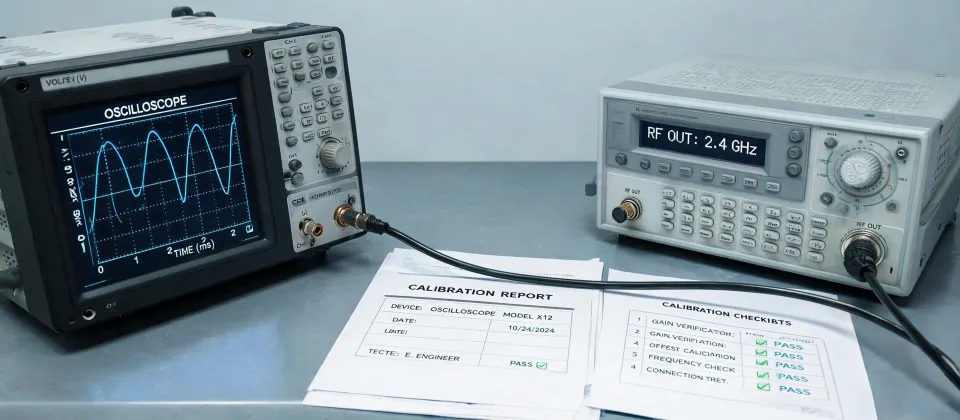
-
The Comparison Framework: What Actually Matters in an Emergency
-
Dimension 1: Availability — The Tektronix Distribution Reality
-
Dimension 2: Measurement Trust — The Calibration Question
-
Dimension 3: Total Cost — The "Cheap Instrument" Trap
-
Dimension 4: Support Velocity — When Your Instrument Acts Up
-
A Quick Note on the Odd-Stuff Question
-
The Scenario-Based Recommendation
I coordinate emergency equipment deliveries for a living. If your production line just lost its only calibrated multimeter or your spectrum analyzer died 48 hours before a compliance audit, I'm the person you call. And in this role, I've developed some blunt opinions about when paying a premium for Tektronix gear makes complete sense — and when it's honestly a waste of money.
Because here's the thing. When most engineers think about Tektronix, they picture oscilloscopes — the company basically defined the category. But the same logic that applies to their scopes applies to their spectrum analyzers, multimeters, and even accessories like thermocouple probes and 12-inch dial calipers. The question I'm asked daily isn't which instrument is better. It's is a Tektronix worth the extra cost and the longer wait when I'm already behind schedule?
Let's settle this with some real comparisons.
The Comparison Framework: What Actually Matters in an Emergency
When I'm triaging an urgent test-and-measurement need, I evaluate options on four dimensions — not spec sheets, not marketing claims.
- Availability — Can you physically get it before your deadline?
- Measurement trust — Will the data hold up if challenged? (Calibration, traceability.)
- Total cost — Including the cost of the instrument failing at the worst moment.
- Support velocity — If the instrument misbehaves, how fast can a human help you?
I'll be honest upfront: I have mixed feelings about the premium Tektronix commands. On one hand, I've seen it save projects. On the other, I've watched procurement teams overpay because they defaulted to a brand name without checking the actual situation. So here's a dimension-by-dimension breakdown from someone who's paid both the rush fee and the price of cheap.
Dimension 1: Availability — The Tektronix Distribution Reality
This is where conventional wisdom often fails. There's a lingering belief that "big brand equals long lead times." That was true 15 years ago, when Tektronix products moved through a few massive distributors. Today, the channel is different.
In March 2024, a client in Phoenix needed a Tektronix RSA306B spectrum analyzer for a site survey that a regulatory inspector had suddenly moved up by two weeks. The RSA306B is a USB-based spectrum analyzer, so it's a compact unit that ships easily. We found it in stock at two national distributors — not special-order. It arrived in two days, which beat the generic USB spectrum analyzer we'd also ordered as a backup (four days, because the budget vendor had to drop-ship from a different state).
That's not an isolated anecdote. In my experience across 200+ rush orders, Tektronix's professional distribution network is faster than budget-brand channels for in-stock items. They know labs have deadlines. Their distributors hold real inventory.
But there's a genuine catch: the Tektronix multimeter line, for example, doesn't always sit on the shelf next to the Fluke units at your local electrical supply house. If you need a specific Tektronix model — not just "any" model — the lead time can stretch if it's not a fast-moving SKU.
Verdict on this dimension: For the RSA306B and the flagship oscilloscopes, availability is comparable to or better than budget alternatives. For less common models, the budget brands actually win on pure availability — because they're everywhere.
Dimension 2: Measurement Trust — The Calibration Question
Here's where I've seen projects genuinely saved by the Tektronix premium.
Last November, we got an emergency call from a defense contractor. They'd just discovered their in-house calibration interval had lapsed on a critical signal measurement. The instrument had to be replaced — not repaired, replaced — in under a week, with valid NIST-traceable calibration.
The Tektronix unit we sourced came with fresh calibration documentation. We paid the rush premium and a calibration-certificate fee. Total extra cost: roughly $600. The generic alternative from a discount vendor? It would have been a little cheaper to buy, but it would have gone to a third-party calibration lab for another week — blowing the deadline. Missing that window would have triggered a $50,000 penalty clause in their government contract.
This is where the "Tektronix is overpriced" argument falls apart in emergency scenarios. You're not buying the instrument. You're buying the documented evidence. The calibration data, the traceability chain, the certainty that no auditor will question your measurements.
The "it's just a logo" thinking comes from an era when basic measurement technology was simpler. Today, a 12-inch dial caliper from a no-name brand might look identical to a better-branded one — and sometimes it's actually fine. But when you're measuring RF spectrum or precision voltage, the difference between a lab-grade instrument and a budget one isn't cosmetic. It's the difference between data that stands up in a report and data that starts a four-hour argument during an audit.
Verdict on this dimension: Tektronix wins decisively — if the measurement will be scrutinized. If the data is only for your own internal tuning, this advantage disappears.
Dimension 3: Total Cost — The "Cheap Instrument" Trap
Let me talk about the $15,000 lesson in numeric form.
In 2023, we had a client choose a budget-brand multimeter over a Tektronix unit to save $140 on a rush order. The budget meter arrived quickly. It even seemed accurate for the first few hours. Then, two days into a critical thermal-validation run, the readings started drifting. The thermocouple input — a standard K-type connection — showed a 6°C offset that appeared without warning.
We spent eight hours troubleshooting the thermocouple first (because "it's obviously the sensor, not the meter"). Then we stopped the entire test run. Re-ran it with a different meter. Found the data from the cancelled run was entirely unusable. The lab lost 17 hours of test time, the engineer missed a report deadline, and the client's launch slipped by a week.
The budget meter went back for a refund. The total cost of that $140 savings: roughly $4,800 in labor and rework, plus the client relationship damage.
Now, I'm not saying every budget multimeter is unreliable. But here's what I've learned in this job: when an instrument fails in an emergency, it fails at the exact moment you can't afford a backup plan. Tektronix's consistency isn't about being indestructible — it's about failing rarely, and when it does fail, failing in a way you can detect through self-calibration and diagnostics.
Verdict on this dimension: If the measurement feeds a decision with financial or compliance consequences, a Tektronix is effectively cheaper. If you're measuring something where a ±2% error genuinely doesn't matter — a go/no-go check on a battery, a rough resistance value — the budget tool is the rational buy.
Dimension 4: Support Velocity — When Your Instrument Acts Up
This is the dimension nobody considers until they need it.
In the middle of a rush project, instruments do things you don't expect. The other week, a client called about a Tektronix function generator that wouldn't output a clean sine wave above 20 MHz. They'd already spent two hours reading forum threads and adjusting cables.
I told them to call Tektronix support directly. They had a human on the line in under four minutes. It turned out to be a minor setting inside the instrument's signal-path configuration — a known quirk, not a defect. Fixed in seven minutes.
Now, let's compare that to the budget-brand function generator sitting in our own test lab. When it developed an intermittent fault last year, I contacted the manufacturer's support line. The response came by email — four days later — asking for a video of the problem. We had the data by then, but the instrument was still dead. It sat in a corner for three weeks before we could get an RMA.
In an emergency, documentation and support speed are part of the product. Tektronix's educational library — guides, application notes, even the basic oscilloscope tutorials on their site — also saves time when you're training someone fast. You won't get that from a generic vendor selling a rebranded instrument.
Verdict on this dimension: A resounding Tektronix win — with one exception. If your local budget-brand distributor has a bench technician who can fix non-Tektronix gear same-day, the support calculus changes. But that's rare.
A Quick Note on the Odd-Stuff Question
I get asked about peripheral measurement tools all the time. People search for things like 12 dial caliper or thermocouple specifications, expecting brand-name comparisons. Here's my honest take on that.
Tektronix doesn't make dial calipers. They make probes and accessories for their own instruments. And for something like a 12-inch dial caliper, you genuinely don't need a premium brand — a decent 12-inch caliper from any reputable industrial supplier is fine, because the measurement tolerance your eyeball is reading (±0.001" on a good day) is far looser than the instrument's own error.
Similarly, if you're buying a thermocouple for a simple temperature readout, a standard K-type from any major sensor maker is perfectly acceptable. Premium sensor branding matters mainly in extreme environments — cryogenic, high-vibration, or high-EMI settings — where construction quality directly affects the signal.
And if you've got a Mitutoyo digital micrometer and need to know how to turn it off — it's the yellow button on the top-left (or sometimes with a short delay on the ON/OFF button). You don't need a service call for that one either.
The point: part of being a credible professional is knowing when not to upsell a premium brand. The same logic applies to Tektronix. Their core instruments are worth the premium. Their brand doesn't magically improve the performance of a simple sensor or a manual measuring tool.
The Scenario-Based Recommendation
Here's the straight answer from someone who has burned a lot of clients' money both ways.
Buy the Tektronix (even at premium pricing) when:
- The measurement data will be reviewed by a third party — an auditor, a regulatory body, a customer's quality team.
- You're on a deadline where a failed re-test costs more than the instrument's entire price.
- You need reliable documentation and calibration traceability included with the purchase.
- You value support that's available on the day you call, not the day they reply.
Skip the Tektronix premium (and choose a reasonable budget option) when:
- The measurement is for internal troubleshooting only — you're confirming a signal exists, not characterizing it precisely.
- Your deadline is flexible enough that a re-test, if something seems off, costs you nothing but a day.
- You already have a relationship with a local calibration or repair shop that can service the cheaper unit same-day.
- You're measuring something simple like a caliper, a basic thermocouple temperature readout, or a continuity check.
I recommend Tektronix confidently for about 80% of my emergency orders. But if you're in that other 20% — where a calibration certificate never gets read, or where budget constraints are genuinely tight — I'll be the first person to tell you to save your money.
Bottom line: it's not about which brand is "best." It's about which instrument's failure would hurt you more. And that's a calculation only you can do. I just help you do it faster.
Pricing and availability verified as of January 2025; confirm current stock and rates with your distributor before ordering, especially for same-day needs.

Marcus Feld
Marcus Feld is an electrical test and measurement analyst specializing in multimeters, oscilloscopes, clamp meters, insulation testers, spectrum analyzers, and data loggers. He applies IEC 61010-2-030 and IEC 61010-031 concepts while examining measurement category, bandwidth, true-RMS response, input loading, and stated uncertainty. His work helps maintenance engineers and test teams choose safe instruments with performance suited to the signals and environments they actually measure.
Leave a technical comment