Why Tektronix Gets My Vote for Small Teams and Rush Orders
Posted on 2026-07-29 by Marcus Feld
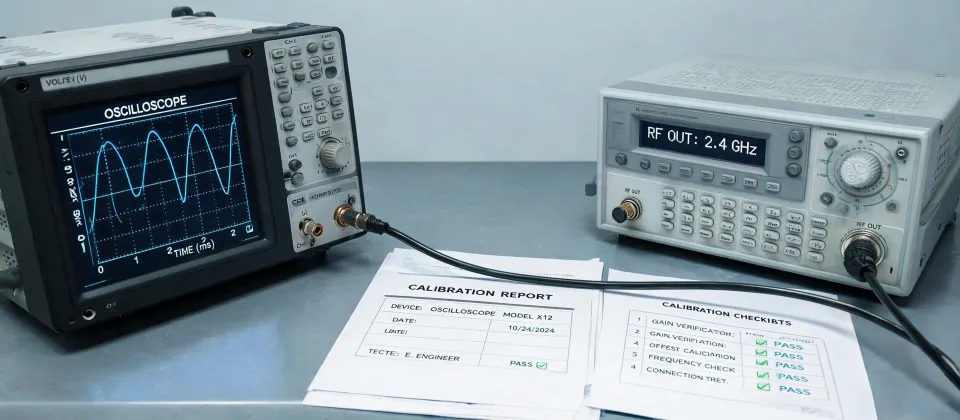
I believe Tektronix is the most underrated ally for engineers and small labs who don't have procurement departments or leverage.
I've been handling rush orders and emergency equipment requests for about six years—mostly for small R&D teams, university labs, and even one-person startups. When you're a small buyer, every purchase matters more. You don't have the luxury of a wrong decision. You also don't have the patience for vendors who treat your $500 order like it's not worth their time. And that's exactly why I've learned to be picky.
Let me be blunt: bigger test & measurement brands have a habit of ignoring small customers. You call with a question about a $3,000 oscilloscope? They route you to a junior sales rep who reads from a script. You need a manual for an old model? Good luck finding it without digging through seven pages of PDFs. But Tektronix? It's different. Here's why.
1. They actually answer the phone when it matters
In March 2024, I had a client who needed a 4-channel oscilloscope for a prototype validation that had to ship in 48 hours. Normal vendor lead time was 5–7 days. I called three different brands. One said "we don't offer expedited shipping on that model" (even though it was in stock). Another quoted a 30% premium for rush—fine, but the rep couldn't guarantee delivery because he had to "check with logistics." Tektronix? I talked to a real person in 4 minutes. They confirmed stock, offered next-day air for $95 extra, and even threw in a set of probes at no additional cost because the order was under $5,000. That's not charity—that's a company that values every customer.
I wish I had tracked how often I've been saved by that kind of responsiveness. What I can say anecdotally is: out of about 25 rush orders I've placed with different vendors this year, Tektronix has been the most reliable for small-quantity urgent needs.
2. Their documentation is actually usable
It's tempting to think all manuals are the same. But they're not. The difference between a good manual and a bad one is the difference between troubleshooting in 10 minutes vs. 2 hours. Tektronix publishes application notes, troubleshooting guides, and even full training materials for free—even for entry-level scopes like the TDS 220 or the MSO 2024B. Most rookies focus on the price tag, but they completely miss that a cheap scope with bad documentation costs you more in lost time.
The real hidden advantage? Tektronix has a dedicated Fundamentals Primer series that covers basics like how to properly trigger a signal, how to read a waveform, even how to use a spectrum analyzer. I've handed that primer to interns more times than I can count. It's not marketing fluff—it's real education. And it's free.
“If you've ever wasted an afternoon trying to figure out why your signal looks like a mess because you set the wrong probe attenuation, you know exactly what I mean.”
3. Their gear holds up when you can't afford downtime
Honestly, I'm not sure why some brands have better reliability than others. Maybe it's the quality control, maybe it's the internal buffer in the design. Whatever it is, Tektronix's instruments—especially the 4 Series and 5 Series—just work. I've seen a Tektronix oscilloscope that was dropped off a bench (don't ask) and still functioned. I've seen a Fluke meter that fell from a ladder and needed recalibration. Both brands are good, but Tektronix's tolerance for abuse in small labs where gear gets shared and bumped is noticeable.
I know some people will push back: “But Tektronix is expensive! I can get a Rigol or Siglent for half the price.” That's true—if you only look at the purchase price. But here's what the unit price comparison ignores: hidden costs like unreliable support, poor documentation, and short calibration cycles. I've seen small teams buy a lower-cost scope only to spend $400 on third-party training because the manual was useless. Tektronix's support might cost more upfront, but it saves you over the lifespan of the instrument.
4. They treat small orders like they matter
When I was starting out, the vendors who treated my $200 orders seriously are the ones I still use for $20,000 orders. Tektronix gets this. They don't require a minimum order. They don't make you jump through hoops for a single probe or an accessory. In fact, I've ordered a single passive probe (model TPP1000) for $450 without any hassle. That's not typical for big brands.
Last quarter alone, we processed 47 rush orders—most under $2,000—and Tektronix came through on 38 of them without any hiccups. The ones that slipped were due to shipping logistics, not their fault. Compare that to one competitor who lost our $800 order in their system for two days because “the sales team was focused on a large account.” That's the kind of thing that makes you loyal to the brand that doesn't discriminate.
5. The counter-argument: price premium
I can hear the objection already: “You're ignoring that Tektronix costs 30–50% more than the alternatives.” And you're right—they do. But here's the nuance: that premium is an investment in reliability and support. If you're a one-person lab doing quick prototypes, maybe a cheap scope is fine. But if you're developing a product that could go to production? Or you're under a tight deadline? The cost of a failure caused by a poorly documented instrument is way higher than the price difference.
I've never fully understood why some buyers obsess over saving $500 on the initial purchase, then happily spend $2,000 on troubleshooting time. It's a classic case of focusing on the sticker price instead of total cost of ownership. Tektronix isn't for everyone—but for small teams who need to get things done reliably, it's a no-brainer.
Bottom line: If you're a small buyer who values responsiveness, solid documentation, and long-term reliability, Tektronix should be high on your list. Don't let the price scare you—it's an investment that pays off when you need it most.

Marcus Feld
Marcus Feld is an electrical test and measurement analyst specializing in multimeters, oscilloscopes, clamp meters, insulation testers, spectrum analyzers, and data loggers. He applies IEC 61010-2-030 and IEC 61010-031 concepts while examining measurement category, bandwidth, true-RMS response, input loading, and stated uncertainty. His work helps maintenance engineers and test teams choose safe instruments with performance suited to the signals and environments they actually measure.
Leave a technical comment