I Almost Rented a Tektronix Oscilloscope. Here's Why I Bought It Instead
Posted on 2026-08-12 by Marcus Feld
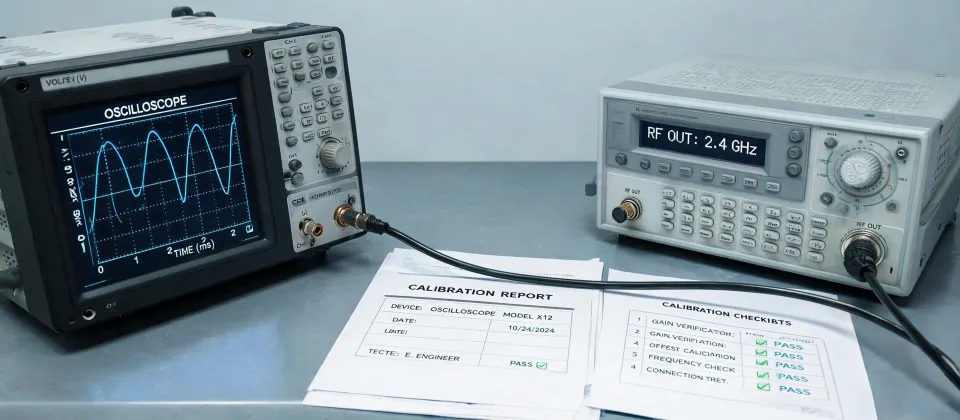
It was a Tuesday afternoon when Paul, our lead engineer, walked into my office carrying the remains of a probe. “This one gave up after the last inspection run,” he said. “And the old scope's memory is maxed out every time we try to capture a glitch. We need a serious upgrade before the pilot corrosion project starts.”
That project was a big deal for us. We were going to test a new sensor array, run flow measurements on a small bore pipe, and spend a month doing on-site diagnostics. Paul asked for a Tektronix oscilloscope—he'd used them at his previous job and didn't want to relearn a new interface. The list also included a mag flow meter for the pilot loop and a pair of clamp meters for the field techs. Our annual lab equipment budget? $6,000. That had to cover everything, including cables and any software we might need.
I'm not an engineer, so I can't speak to the technical reasons why one scope is better than another. But from a procurement perspective, I know that a tool that sits unused because nobody wants to deal with it is a bad deal regardless of specs. Paul knew what he wanted, and that mattered.
Renting a Tektronix sounded cheap until I read the fine print
The first quote for a tektronix oscilloscope rental came in at $280 per month. I almost closed my laptop right there. That's under $3,400 for a year—basically the same as buying. But something told me to look closer. I've been burned before by “setup fees” and “service charges,” so I asked for the full contract.
Here's what the $280 monthly rate didn't include: a mandatory calibration service at pickup and return ($180 each), shipping both ways ($120), a “handling fee” that was apparently standard ($35), and a damage waiver that was described as “recommended but required if you use our insurance.” The sales rep said setup was “free,” but the contract had a line for a $90 configuration charge. That added up to an extra $950 per rental cycle. Plus, rental meters in my experience are calibrated to ISO/IEC 17025 standards—which is great—but you pay for that certification every single time.
I don't have hard data on how many rental deals include these fees, but I want to say it's the norm rather than the exception. At least, that's been my experience with instrument rentals over the past six years. The upshot: the real monthly cost was more like $500, and that's if we returned everything in perfect shape and on time. Miss the return date by a day and there's a late fee that made my eyebrows rise.
Meanwhile, the engineers asked about other gear
While I was still buried in that spreadsheet, Paul messaged me: “Need a mag flow meter for the pilot line. Can we use the same brand as the scopes?”
Turns out, Tektronix doesn't make mag flow meters. So we called a process instrumentation vendor we'd used before. They asked about pipe diameter, flow range, accuracy class, output signal, and whether we needed to measure conductivity. I'll be honest—I pushed most of those questions onto the vendor because I wasn't sure what our pilot loop needed. Paul verified the basics and we settled on a unit that came with a local calibration certificate. It wasn't the cheapest, but it came with support, and that was worth something.
Then came the question I hear constantly from the field team: “Which Fluke multimeter should we buy?” They'd seen a promo for the Fluke 324 clamp meter. At roughly $190 each, it was an easy fit for our budget. But I've learned to ask a few extra things before handing out purchase order numbers:
- What will you measure? For most of our maintenance work, it's AC/DC current up to 400 A, resistance, and basic continuity. The 324 covers that.
- Do you need inrush current or high-end logging? Not really. Skipping those features saved us about $80 per meter.
- How durable does it need to be? It's going to live in a service truck, so it'll likely get knocked around. Fluke has a solid reputation for ruggedness—that's not a marketing myth, it's why they're often the default choice.
We ended up buying three Fluke 324s. Some might argue we should've looked at Tektronix's multimeters too, and I agree they're worth considering. But our electricians were already trained on Fluke's interface, and that familiarity alone saves time and mistakes. It's a practical decision, not a brand loyalty contest.
The purchase vs. rental calculation: buying won
Back to the main event. I put together a side-by-side in the same spreadsheet where I track every purchase order over $500. The Tektronix model Paul had in mind—a TBS2000 series scope—was quoted at roughly $3,200 from an authorized dealer, including a five-year warranty. Tektronix's product documentation lists the full specs, and the dealer confirmed the factory calibration certificate. The rental quote for a comparable scope, with all those fees baked in, came to about $500 per month. That means rent for seven months and you've already spent more than buying. And at the end of the year, you have zero equipment to show for it.
There were also intangibles that don't show up in the spreadsheet. Owning the scope meant our engineers could leave a test running all night, or train new technicians on the same unit they'd be using daily. There's no line item for that, but it's real. I should note, though, that we also considered buying a used tektronix oscilloscope for sale. The savings were tempting—maybe 25% off the new price. But we couldn't verify how it had been handled, and calibration support was unclear. This gets into technical territory that isn't my expertise, so I'd recommend talking to a metrology specialist if you're weighing used gear.
In the end, we purchased the Tektronix, bought the mag flow meter, and ordered the Fluke 324s. The total came to $4,850—well under our $6,000 budget. We even had room left for a few passive probes and a calibration check on the flux meter we already owned.
Six months later, I can tell you the scope gets used every single week. The pilot project went smoothly, and now it's become the go-to instrument for a new process validation study that just landed. If we'd rented, we'd have spent close to $3,000 by now and had nothing to show for it except a folder of invoices.
What I learned (again)
Every time I rush to compare prices, I forget that the real cost is the total cost. That's a lesson I relearn more often than I'd like, and it's exactly why I try to explain it to our engineers instead of just bouncing a purchase order back. When someone asks me which Fluke multimeter to buy, or why I'd pick a Tektronix over a rental, I'll gladly pull up the spreadsheet. An informed customer asks better questions and makes faster decisions—whether that customer is an engineer in my own building or a client on the other end of the phone.
So if you're looking at a tektronix oscilloscope rental, or trying to decide between a mag flow meter and a cheaper alternative, or wondering whether the Fluke 324 is enough clamp meter for your crew, do the boring thing. Build the spreadsheet. Add up every fee, every hour of downtime, every “it's just easier” factor. You might find that what looks expensive at first is the best deal after all.

Marcus Feld
Marcus Feld is an electrical test and measurement analyst specializing in multimeters, oscilloscopes, clamp meters, insulation testers, spectrum analyzers, and data loggers. He applies IEC 61010-2-030 and IEC 61010-031 concepts while examining measurement category, bandwidth, true-RMS response, input loading, and stated uncertainty. His work helps maintenance engineers and test teams choose safe instruments with performance suited to the signals and environments they actually measure.
Leave a technical comment