Tektronix Oscilloscope FAQ: Handheld vs. USB, FLIR E60 Thermal Camera, and LCR Meter
Posted on 2026-09-07 by Marcus Feld
-
1. What do people actually mean by a Tektronix handheld oscilloscope?
-
2. Is a Tektronix USB oscilloscope a real thing?
-
3. For an emergency, should I choose handheld or USB?
-
4. I have an oscilloscope. Why would I add an E60 thermal imaging camera?
-
5. How to use a FLIR thermal camera for a quick electrical check
-
6. If I already have a Tektronix oscilloscope, do I also need an LCR meter?
-
7. What is the fastest way to pick the right Tektronix tool?
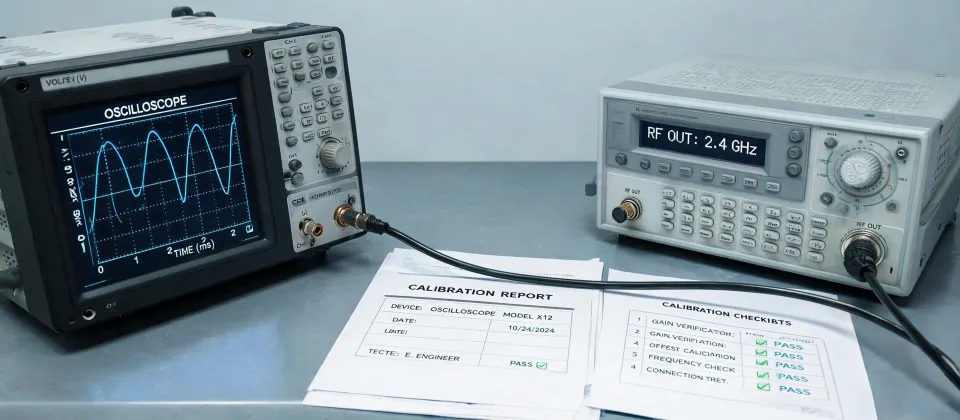
When I triage a rush test-equipment request, I don't start with spec sheets. I start with four questions: What's the signal? Where is it? Is the ground connection safe? And what can physically arrive before the deadline? The answers below are the practical version of what I tell engineers when they have hours, not weeks.
1. What do people actually mean by a Tektronix handheld oscilloscope?
When someone types 'tektronix handheld oscilloscope', they usually don't mean a pocket toy. They mean a scope that can travel: battery powered, small enough to set on a panel, and with inputs that don't force a ground connection through the AC cord. That last part matters more than bandwidth.
Not every portable scope is fully isolated. A scope can run on battery and still share a common ground between channels. If you need to put the probe on a floating circuit or a bus that is above earth ground, the channel-to-earth isolation rating is the spec to check first. Tektronix publishes isolation and CAT ratings in each product manual. Read those before you order, especially if the job involves motor drives or power supplies.
In my opinion, a slightly heavier scope with safe isolation beats a tiny one with clever marketing. The best field instrument is the one that doesn't add ground-loop confusion to a rushed job.
2. Is a Tektronix USB oscilloscope a real thing?
Someone who searches for 'tektronix usb oscilloscope' might be picturing two different things: a full Tektronix oscilloscope with USB connectivity, or a PC-based acquisition gadget. The first is an instrument with probes, an analog front end, and waveform capture capability. The second is a different purchase, and the phrase doesn't line up with a single Tektronix product line.
When triaging an equipment request, I ask for a model number. Then I ask how the PC connects, because USB bus power and ground can matter. Also, remember that USB is about data transfer. It doesn't change how the probe connects to your circuit. A Tektronix scope with USB can still be the wrong scope if it doesn't have the required bandwidth, probe, or isolation for the signal.
I'm not 100% sure what picture a buyer has when they ask for a USB scope, so I never assume. I ask: do you want to save and export waveforms to a computer, or do you want a PC-based acquisition device? Those are different orders.
3. For an emergency, should I choose handheld or USB?
Handheld, in most cases. Not because PC-based scopes are bad, but because an emergency usually means a machine, a cabinet, or a drive on site. A USB scope with a laptop has a ground reference and a power supply that may not be compatible with a floating measurement. A battery-powered portable scope can often be used without that ground path.
Based on our internal data from 200+ rush requests, more first visits fail because of wrong probes or ground loops than because the scope bandwidth was too low. The upside of taking the lab USB instrument was saving time walking to storage. The risk was a bad measurement at the worst moment. In my opinion, saving twenty minutes is not worth creating a second visit.
Then again, if the measurement is safely earth-referenced and the PC software helps with decoding, a USB-based instrument can be exactly right. The choice comes down to where the signal lives, not which gadget is newer.
4. I have an oscilloscope. Why would I add an E60 thermal imaging camera?
A thermal camera doesn't replace an oscilloscope. It points you to the problem before you start probing. The FLIR E60 thermal imaging camera is not a new model, but it still shows up in maintenance carts because it does one thing well: it sees heat.
The incident that changed my view happened in March 2023. A drive was tripping every afternoon under load. I spent time scoping the output and saw nothing abnormal. Then a thermal check found a loose lug on the line side of the contactor. Heat was building up only when current was high. The scope showed the symptom, but the thermal camera showed where the energy was being wasted.
If you do motor controls, power distribution, or electronics repair, use the thermal camera as triage. First pass: look at the panel for hot spots. Second pass: put the scope on the circuit. That order has saved me from chasing ghosts.
5. How to use a FLIR thermal camera for a quick electrical check
People ask me how to use a FLIR thermal camera and expect one universal method. This is the electrical-cabinet method I use with the E60:
- Set emissivity first. Painted breakers and electrical tape are close to 0.95. Shiny copper or aluminum is much lower. If you leave emissivity at 0.95 on shiny metal, the camera will under-read the temperature. Use flat-black paint or tape on a de-energized target when temperature accuracy matters.
- Add load if it is safe. A connection at 10% load can hide a defect that appears at 100% load.
- Focus the image and adjust the level and span. If the span is too wide, a small hot spot will look normal.
- Compare similar phases or components. A Phase A terminal that is 10 degrees hotter than Phase B under the same load is more useful than an absolute temperature guess.
- Save the thermal image plus the visual image. Note the ambient temperature and load current in the report. That makes it evidence, not just a pretty picture.
The FLIR E60 is not a voltmeter. It won't tell you if a terminal is energized. Follow your site's electrical safety rules and use the camera as an indicator, not a final diagnosis.
6. If I already have a Tektronix oscilloscope, do I also need an LCR meter?
If you only look at digital signals and general voltage waveforms, no. An oscilloscope is the right tool for timing, noise, and signal integrity. But it is not the right tool for measuring capacitance, inductance, ESR, or Q accurately.
An LCR meter uses a known sine wave and then measures the magnitude and phase of the current through the component. That lets it separate the resistive part from the reactive part. A scope can get you in the ballpark with a function generator and some math, but probe capacitance and parasitic ground paths add error. If you are matching components, checking suspect electrolytic capacitors in a power supply, or verifying inductors before assembly, the LCR meter is worth the space in the case.
Do you need a matching brand? No. You need a calibrated LCR meter with suitable leads. In a rush, the worst thing is to swap parts and still have a fault. An LCR meter helps you avoid that second trip.
7. What is the fastest way to pick the right Tektronix tool?
I choose in this order: safety isolation, channel count, bandwidth, and accessories. Don't let someone start with bandwidth because it is the easiest number to print in a headline.
According to Tektronix's XYZs of Oscilloscopes, bandwidth should be at least five times the highest-frequency component in the signal for amplitude accuracy. That rule matters, but only after you have confirmed that the scope can safely measure the signal you are chasing. For a 3-phase drive, that means enough isolated channels. For a small low-voltage board, a USB-connected scope or a compact portable MSO may be fine.
Product names change, and that guidance was accurate as of early 2025. Verify current models, isolation ratings, and probe compatibility on tektronix.com before you quote a delivery date. When you are down to a few hours, the best scope is the one that is calibrated, charged, and has the right probe in the same case.
Marcus Feld
Marcus Feld is an electrical test and measurement analyst specializing in multimeters, oscilloscopes, clamp meters, insulation testers, spectrum analyzers, and data loggers. He applies IEC 61010-2-030 and IEC 61010-031 concepts while examining measurement category, bandwidth, true-RMS response, input loading, and stated uncertainty. His work helps maintenance engineers and test teams choose safe instruments with performance suited to the signals and environments they actually measure.
Leave a technical comment