Sensus Water Meters, Spectrum Analyzers, and Multimeters: A Procurement FAQ
Posted on 2026-11-10 by Mateo Velasquez
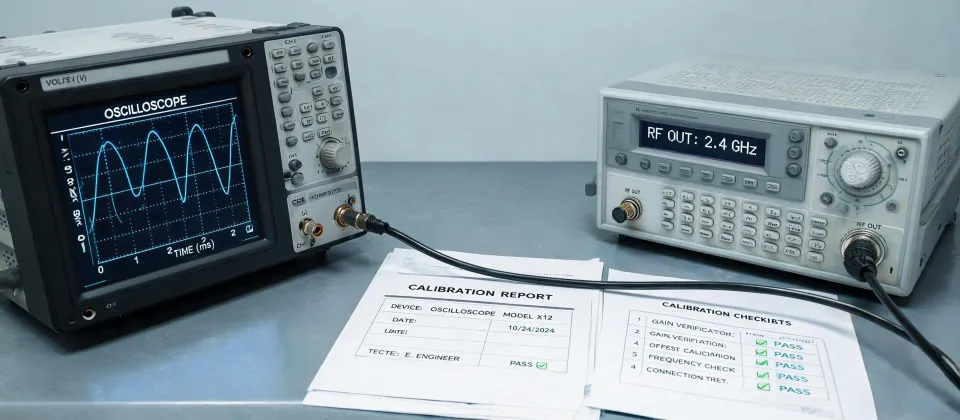
-
What technology does the Sensus iPERL water meter use, and does it justify the cost?
-
How do I choose the right Sensus water meter for my application?
-
Are spectrum analyzers worth the investment for a small lab?
-
What should I look for in a 15b+ digital multimeter review?
-
How do I turn on a Mitutoyo micrometer without damaging it?
-
What hidden costs should I watch for when buying test instruments?
I'm a procurement manager at a 200-person manufacturing company. I've managed our instrument budget ($180,000 annually) for 6 years, negotiated with 30+ vendors, and documented every order in our cost tracking system. Over that time, I've learned that the cheapest option is rarely the most economical. Here are the questions I get asked most often about water meters, spectrum analyzers, multimeters, and micrometers—and my no-nonsense answers.
Questions in this FAQ
- What technology does the Sensus iPERL water meter use, and does it justify the cost?
- How do I choose the right Sensus water meter for my application?
- Are spectrum analyzers worth the investment for a small lab?
- What should I look for in a 15b+ digital multimeter review?
- How do I turn on a Mitutoyo micrometer without damaging it?
- What hidden costs should I watch for when buying test instruments?
What technology does the Sensus iPERL water meter use, and does it justify the cost?
The Sensus iPERL uses solid-state electromagnetic technology—no moving parts. That means fewer failures and lower maintenance over its 10- to 15-year service life. From my experience, the upfront price is higher than mechanical meters, but the TCO often comes out lower. I only believed that after ignoring it once. In 2022, we installed 50 mechanical meters to save $20 each. Within two years, 12 failed early. The “savings” cost us $8,400 in replacements and labor. So yes, the technology type matters for your budget. As a cost controller, I now insist on calculating total cost of ownership before approving any meter purchase—even if the initial quote looks scary.
How do I choose the right Sensus water meter for my application?
Match the meter to your pipe size, expected flow range, and connectivity needs. Sensus offers several lines—iPERL, OMNI, and others—so you need to check the specs carefully. Here's something vendors won't tell you: the first quote rarely includes installation, commissioning, or calibration certificates. Always ask for a total installed cost. I remember comparing two quotes for an OMNI meter—one was $200 cheaper, but it didn't include the mounting kit or the first-year calibration. Once I added those, the “cheaper” option was $150 more. If I remember correctly, our last order had a four-week lead time, but don't quote me on that. My advice: build a simple spreadsheet that lists every line item from each vendor, then compare apples to apples.
Are spectrum analyzers worth the investment for a small lab?
It depends on how often you'll use it. A decent spectrum analyzer runs $3,000 to $10,000. If you only need occasional measurements, renting or outsourcing is often cheaper—maybe $500 per week. But if you need frequent access, buying makes sense. There's something satisfying about having your own analyzer and not waiting for a rental to ship. However, watch out for cheap models with poor resolution bandwidth and high noise floors. They can give you inaccurate results, and that costs more in rework than the analyzer itself. I've seen a $2,000 “bargain” analyzer lead to a $5,000 redesign because it missed a spurious emission. So factor in the cost of potential errors, not just the purchase price.
What should I look for in a 15b+ digital multimeter review?
Most reviews focus on features, but as a cost controller, I look at calibration costs, warranty, and durability. A $50 multimeter might need annual calibration at $75—that's 150% of its purchase price every year. A $200 model might have a three-year calibration cycle and a better warranty. I ignored CAT safety ratings once and almost had an incident; now I won't buy anything below CAT III 600V for our industrial work. Here's another thing: most reviews don't mention that the “free” carrying case often costs extra, or that the probes are low quality. I want to say the 15b+ models from major brands are generally reliable, but don't quote me on the exact model numbers. My rule: buy from a vendor that publishes calibration certificates and offers a loaner during service.
How do I turn on a Mitutoyo micrometer without damaging it?
Most digital Mitutoyo micrometers have an on/off button on the face—usually on the right side. But the bigger risk is forcing the thimble if it feels stuck. I didn't read the manual once and forced it, breaking the mechanism. That cost $120 to repair. The correct way: press the button, wait for the display to stabilize, then zero it. If it doesn't turn on, check the battery—but don't overtighten the battery cap. It took me about three weeks—or rather, closer to four when you count the time I wasted trying to fix it myself—to learn that lesson. The conventional wisdom is to buy the cheapest micrometer that meets specs. In practice, the Mitutoyo's smooth action and reliable electronics save you time and frustration, which is worth the extra $50.
What hidden costs should I watch for when buying test instruments?
Everyone says to buy the cheapest instrument that meets specs. In practice, the cheap one often costs more in calibration, downtime, and consumables. Here's my list of hidden costs: calibration (can be 10–20% of purchase price annually), software licenses (some vendors charge for PC connectivity), training (if the interface is confusing), repair turnaround (cheap instruments often need to be shipped overseas), and consumables (probes, cables, batteries). I built a TCO calculator after getting burned on hidden fees twice. Now I require every purchase over $500 to include a three-year cost projection. That's how I cut our instrument budget overruns by 22% in 2023. The lowest quoted price is almost never the lowest total cost—so do the math before you sign.

Mateo Velasquez
Mateo Velasquez is an industrial sensing and connectivity analyst covering proximity sensors, photoelectric sensors, inductive and capacitive sensors, encoders, displacement sensors, signal converters, and IO-Link devices. He uses IEC 60947-5-2 and IEC 61131-9 requirements to examine switching distance, repeatability, cycle time, diagnostic data, electromagnetic compatibility, and ingress protection. He helps automation engineers and OEM buyers specify sensors that integrate reliably with machine controls and tolerate the intended target, mounting, and environment.
Leave a technical comment