What to Know Before Buying a Tektronix Oscilloscope (and Other Essential Test Gear)
Posted on 2026-07-09 by Marcus Feld
-
What to Know Before Buying a Tektronix Oscilloscope (and Other Essential Test Gear)
-
1. Why is a Tektronix 2467B oscilloscope so popular among hobbyists and small labs?
-
2. What makes the Tektronix TBS1000C series a better fit for a modern lab?
-
3. When do I need a moisture meter, and which one should I buy?
-
4. How do I choose a clamp-on flow meter for industrial maintenance?
-
5. What's the right way to use a FLIR thermal camera?
-
6. Can one vendor supply all of these tools?
-
7. Any final advice on making these purchases?
What to Know Before Buying a Tektronix Oscilloscope (and Other Essential Test Gear)
If you're in charge of buying test equipment for an engineering lab or an R&D team, you've probably got a list of must-haves. A Tektronix oscilloscope is usually at the top. But what about the supporting cast—things like a moisture meter, a clamp-on flow meter, or even a FLIR thermal camera?
I've been handling these purchases for about five years now. Our annual budget hovers around $150k across 15 vendors. I've made good calls, bad calls, and one or two that I'm still paying for. Here are the questions I wish I'd asked earlier.
1. Why is a Tektronix 2467B oscilloscope so popular among hobbyists and small labs?
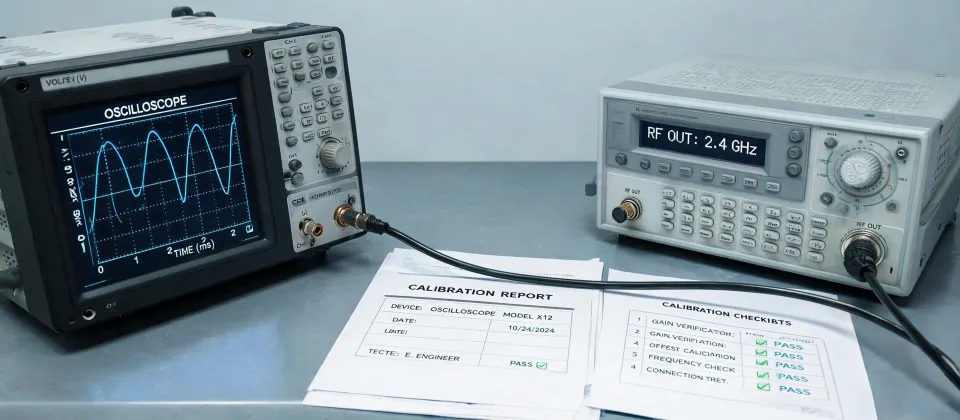
The 2467B is a classic. It's a 400 MHz analog oscilloscope from the 90s, and people still hunt for them. The main reason? That CRT is incredibly bright and sharp—it uses a micro-channel plate (MCP) that makes faint signals pop. For someone working with low-rep-rate signals or just wanting a pure analog trace for audio work, it's hard to beat.
But here's the thing. People assume it's popular because it's the best all-around choice. Actually, it's popular because it's cheap and available used (usually $200–$600). It's a niche tool for specific needs, not a daily driver for a modern lab. For general-purpose debugging, you're better off with a newer digital scope. I learned this the hard way when I bought two 2467Bs thinking they'd be workhorses for our bench.
Personally, I'd argue the 2467B is overrated for most tasks. If you need high-speed single-shot capture or modern analysis features like FFT or serial decoding—which most engineers do—it's not even in the same ballpark as a digital scope.
2. What makes the Tektronix TBS1000C series a better fit for a modern lab?
The TBS1000C series is Tektronix's entry-level digital oscilloscope line. It's aimed at education, service, and basic troubleshooting. It's a solid workhorse: 50–200 MHz bandwidth, 2 or 4 channels, and a 7-inch color display. It also comes with standard features like 20 automatic measurements, a waveform recorder, and mask limit testing—stuff that used to cost extra.
For our lab, these became the default choice for any bench that needed basic signal checking. The digital interface makes it easy to save setups and screen captures, which cuts down on 'can you come look at this?' interruptions. I went back and forth between the TBS1000C and a cheaper alternative for a couple of months. The cheaper option had a smaller screen and no waveform recorder. For $200 more, the TBS1000C was a no-brainer.
What I'd tell anyone: if you're budgeting for a lab, put these on your list for the general-purpose benches. Save the high-end scopes for the development team. The TBS1000C is enough for 80% of the work.
3. When do I need a moisture meter, and which one should I buy?
A moisture meter sounds like a construction tool, not a lab tool. But we use them for incoming material inspection—checking PCBs, components, and raw materials for moisture content before they go into production. High moisture can cause delamination during reflow soldering or corrosion in storage.
The key decision: pin-type vs. pinless. Pin-type meters penetrate deeper and give a more accurate reading on wood or drywall. But for electronics, you want a pinless (capacitance-based) meter. It won't damage the surface. We bought a pin-type first because it was $30 cheaper. First time I used it on a PCB, it left a tiny mark. Immediate regret. Switched to a pinless model the next day.
Trust me on this one: if you're working with electronics or finished products, spend the extra $50 on a pinless meter. The peace of mind is worth it.
4. How do I choose a clamp-on flow meter for industrial maintenance?
Clamp-on flow meters are great for retrofitting onto existing pipes without cutting them. They use ultrasonic sensors to measure flow rate. This is huge for process control and HVAC diagnostics. The big question is transit-time vs. Doppler.
Transit-time meters work best on clean liquids (no bubbles or particles). Doppler meters work on dirty liquids (sludge, wastewater). I made this mistake myself. We bought a transit-time meter for a line that had some air bubbles from the pump. The readings were all over the place. Took me three days and a call to the vendor to figure out what went wrong.
So before you buy, get a sample of the liquid. Or at least know what's in the pipe. Most suppliers will help you pick the right type if you tell them the fluid and pipe material. Also, check the pipe diameter range—some meters only work on 1–4 inch pipes, which might not fit your setup.
5. What's the right way to use a FLIR thermal camera?
Thermal cameras are amazing for finding hot spots in electrical panels, motors, and even building envelopes. But using one well takes more than pointing and shooting.
First, adjust the emissivity setting. Different materials (painted metal, glass, plastic) emit heat differently. If you don't set it correctly, the temperature reading can be off by 20–30 degrees. I've seen people walk around with the default setting (usually 0.95) and miss serious issues.
Second, get a good understanding of reflected temperature. If you're shooting a shiny object, the camera might pick up heat reflected from the user or nearby surfaces. That's a classic misconception: people think the camera 'sees' the object's temperature. Actually, it sees infrared radiation from everything in front of it—including reflections.
For training, FLIR has free online courses. I'd recommend every new operator spend a couple of hours on them. It'll save you from bad data and false alarms.
6. Can one vendor supply all of these tools?
I get asked this a lot. The short answer: rarely. Tektronix is great for oscilloscopes and some signal generators, but they don't make moisture meters or flow meters. For thermal cameras, FLIR is a key player but not the only one.
In our experience, it's better to specialize. Use Tektronix for scopes and probes, a dedicated industrial supplier for meters, and FLIR for thermal imaging. Consolidating for convenience can lead to compromises on quality or price.
I tried bundling once with a big distributor. We saved 5% on the overall quote. But the specific models we got were last year's versions, and the support was mediocre. It took us three months to get a replacement for a faulty probe. These days, I'd rather manage three relationships than get stuck with bad gear.
7. Any final advice on making these purchases?
One thing: always budget for probes and accessories. A new oscilloscope is useless without probes. Good probes can cost 10–20% of the scope's price. And a thermal camera without a tripod or a spare battery is a pain to use in the field.
Also, check the warranty and calibration options. Tektronix offers extended warranties and calibration plans that can simplify lifecycle management. For other gear like meters, look for NIST-traceable calibration certificates. This is critical if you're doing any regulated work (ISO, FDA, etc.).
Making the right call on equipment isn't just about the sticker price. It's about the total cost over a few years, including your time, training, and the cost of a wrong reading. Take it from someone who's been burned on all three.
Marcus Feld
Marcus Feld is an electrical test and measurement analyst specializing in multimeters, oscilloscopes, clamp meters, insulation testers, spectrum analyzers, and data loggers. He applies IEC 61010-2-030 and IEC 61010-031 concepts while examining measurement category, bandwidth, true-RMS response, input loading, and stated uncertainty. His work helps maintenance engineers and test teams choose safe instruments with performance suited to the signals and environments they actually measure.
Leave a technical comment