Should You Buy a Tektronix 465 in 2025? A Cost Controller's Total Cost Comparison
Posted on 2026-08-26 by Marcus Feld
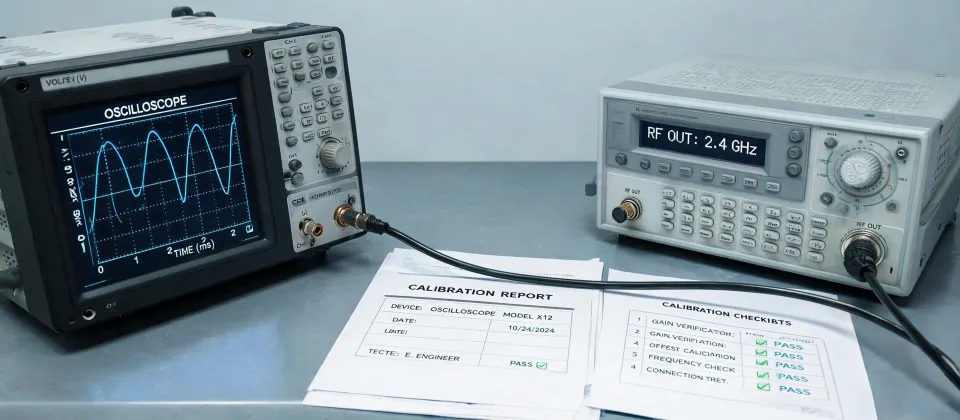
Six years into managing a roughly $120,000 annual measurement budget at a 40-person electronics design company, I still remember the day I nearly signed a purchase order for a brand-new oscilloscope without asking why our lab kept an antique around. Then I walked past the bench and saw a Tektronix 465—circa 1977, 100 MHz, slightly dusty—sitting right next to a modern digital scope. Our lead engineer was using it to verify a motor controller signal.
"Why is this here?" I asked. "Because it works," he said. That answer confused me enough to spend the next several months running a full cost and performance comparison between the vintage Tektronix 465 and current Tektronix oscilloscopes. Here's what I learned.
How I Structure Any Test Equipment Comparison
Before looking at specs, I lock down three metrics that determine whether a purchase is justified: total cost of ownership, performance per dollar, and time cost. Every tool we buy—oscilloscopes, height gauges, thermal cameras—gets scored on these same criteria. It's a habit I picked up after overpaying for a "budget" instrument that had hidden calibration requirements.
For this comparison, I tracked our Tektronix 465 and our modern MSO series scope for five months, noting repair costs, calibration needs, documentation access, and real measurement tasks.
Why the Cheap Scope Wasn't Actually Cheap
There's no contest on sticker price. A used Tektronix 465 sells for $150 to $350 on typical auction sites (as of January 2025). A modern Tektronix oscilloscope—even the entry-level TBS1000 series—will set you back $1,200 or more. The 465 wins the sticker price battle instantly.
But when I ran the total cost numbers, the story changed. The 465 needed calibration. A proper calibration from a technician who still services analog scopes cost us $280 (this was back in 2023). We also had to replace two electrolytic capacitors and a worn encoder knob—$45 in parts plus four hours of our technician's time. Then we spent six hours testing the unit against a known reference signal to confirm it still met its original specs. Total non-purchase cost in year one: around $400 and a full day of someone's labor.
A friend who restores vintage instruments had warned me: "Budget for servicing on anything analog from the 70s." I didn't listen. The capacitors and calibration costs proved him right.
The modern scope cost more upfront, but came with a five-year warranty, a calibration certificate, and zero repair work in the same period. No capacitors to replace. No hidden service calls. Its three-year total cost of ownership actually came out lower per year than the 465's—and it still has factory support.
Here's the thing: I'm not saying the 465 is a bad value. I'm saying that if you budget $300 for a vintage scope, you need to allocate another $300 to $500 for the work required to make it trustworthy. Most buyers focus on the headline price and miss that completely.
Where the 1977 Scope Still Surprised Me
Here's the part I didn't expect. The Tektronix 465 has no digital storage, no FFT, no automatic measurements. But its analog CRT display is genuinely excellent at showing repetitive waveforms. There's no aliasing, no sample rate delay, no menu structure. You turn a knob and the trace responds instantly. Watching a senior engineer debug a motor controller in five minutes with that 40-year-old scope made me understand the appeal.
The moment we needed to capture a single-shot transient—like a power supply startup glitch—the 465 went blank. The event passed and the CRT showed a faint flicker. No memory. No way to retrieve it. The modern scope caught it, stored it, and let us zoom in on the timing details.
When I compared the two instruments side by side, I finally understood that the real distinction isn't "old vs. new." It's analog vs. digital. They serve different measurement needs. If your work involves repetitive analog signals—audio circuits, power rails under load, legacy equipment—the 465 remains effective. For anything involving single-shot events, serial protocols, or automated analysis, you need a modern scope.
The 200-Page Manual Problem
Try to find a good Tektronix 465 oscilloscope manual. You'll find scanned PDFs on forums and a few engineering archive sites. Some have missing pages. Some have faded schematics. The content is impressive—detailed calibration routines, timing diagrams, circuit theory that teaches you how analog scopes actually work—but using it daily is a real drag. Our technicians spent an average of 40 minutes per session looking up settings or verifying connections when using the 465.
The modern scope has built-in help and a searchable online documentation portal. Same information, roughly two minutes to access. I tracked this, and it was during that tracking that I realized the real cost of the 465 isn't in the capacitors. It's in the time. Reading a scanned manual from 1977 to adjust a trigger setting is not how I want my team spending billable hours.
To be fair, if you're learning analog electronics, the 465 manual is a masterclass. It's like an engineering textbook with practical examples. But for production work, you want clear indicators and quick answers, not a treasure hunt through a PDF.
The Other 60% of Your Measurement Budget
Oscilloscopes get all the attention, but the rest of the measurement budget deserves scrutiny too. Three categories keep coming up in our lab, and they've all taught me something about buying instrumentation.
Height gauges. For dimensional inspection, a quality digital height gauge starts around $600 and handles most everyday calibration checks. It's one of the most cost-effective tools I've purchased. Avoid the temptation to buy a CMM just because one project manager asked for it. A height gauge and a granite surface plate cover a lot of ground—we used ours weekly for mechanical verification.
Confocal microscopes. The price range for a confocal microscope is $20,000 to $200,000 depending on configuration, and I nearly approved a rental at $4,500 per month before we scrutinized the actual need. The rental, in hindsight, was the right call—we got the surface metrology data, learned the limitations of the method, and sent the instrument back when the project ended. Buy advanced instruments only when you've validated the demand.
Thermal cameras. The FLIR vs Fluke thermal camera question comes up often, and both are legitimate. FLIR has a broader ecosystem and more lens options. Fluke's cameras are built like field tools, which matters for industrial maintenance. When we compared quotes for a specific model class, the difference was about 12% in total cost including accessories. My advice: define your temperature range, resolution, and software integration first, then compare. And don't rely on marketing claims—per FTC guidance, claims need to be truthful and substantiated. Ask for calibration certificates and measurement uncertainty data before you sign.
Final Verdict: What Should You Buy?
After all that, here's the decision framework I'd apply:
Buy the Tektronix 465 if you're a hobbyist, a student learning analog circuits, or an engineer who needs a dedicated repetitive-waveform monitor with an immediate, tactile feel. Budget $300 to $550 for the unit plus initial servicing. Find the full Tektronix 465 oscilloscope manual online or buy a quality scan and keep it next to the instrument.
Skip the 465 and buy a modern Tektronix oscilloscope if it's a professional tool for product development, digital debugging, or compliance testing. A basic modern scope outperforms the 465 in every criterion that matters for a working lab: capturing non-repetitive events, automated measurements, storage, and software integration.
Don't buy an oscilloscope at all if you haven't validated the actual measurement gaps in your lab. Start with a multimeter and a signal generator. Add a thermal camera (do your own FLIR vs Fluke evaluation based on your environment), a height gauge for dimensional work, and rent a confocal microscope before committing to ownership.
And track everything. When I audited our 2023 spending, I found that 30% of our budget overruns came from underestimated calibration and accessory costs—not from the primary equipment. Once we added calibration to every purchase request, the overruns disappeared. That, more than any specific scope recommendation, is the lesson that has saved us money every year since.
Marcus Feld
Marcus Feld is an electrical test and measurement analyst specializing in multimeters, oscilloscopes, clamp meters, insulation testers, spectrum analyzers, and data loggers. He applies IEC 61010-2-030 and IEC 61010-031 concepts while examining measurement category, bandwidth, true-RMS response, input loading, and stated uncertainty. His work helps maintenance engineers and test teams choose safe instruments with performance suited to the signals and environments they actually measure.
Leave a technical comment