Tektronix Support: Choosing the Right Help for Scopes, Sensors, and Thermal Cameras
Posted on 2026-08-24 by Marcus Feld
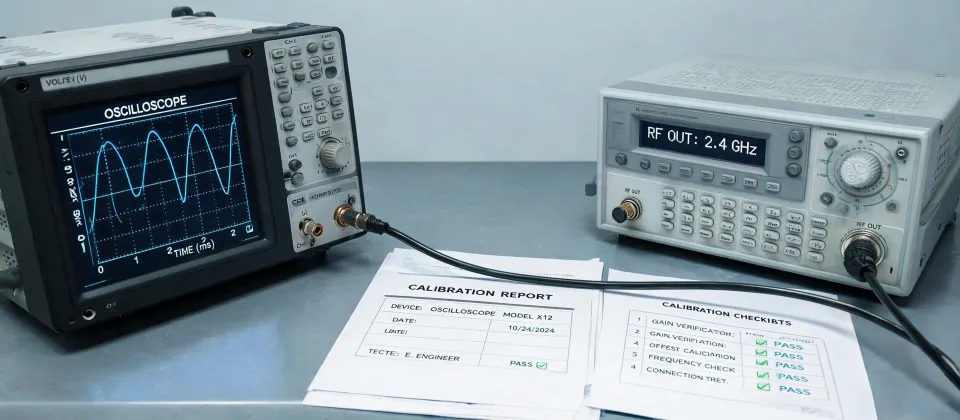
Actually, the question rarely arrives that cleanly. It shows up in our support queue more like: "Can Tektronix support help me verify a magnetic cylinder sensor?"
People reach out through the Tektronix support portal, but the thing they're working on isn't always ours. Sometimes it's a flow sensor on a production line. Sometimes it's a FLIR thermal camera that's been sitting in the lab. And sometimes, yes, it's a Tektronix oscilloscope with an intermittent trigger problem they've been fighting for two days.
I review technical documentation at Tektronix before it goes to customers—roughly 200 items a year, from application notes to online support articles. In our Q1 2024 quality audit, I rejected about 15% of first drafts for being vague, incomplete, or disconnected from what users actually type into a search box. So I don't mind telling you where we're strong and where we simply aren't the right people.
Here's the thing: "I need support" is not one question. It's three different scenarios, and each has a different answer.
- Your question is about an instrument. Tektronix support is the right place.
- Your question is about a sensor. We can help you verify the electrical signal—but we cannot configure the sensor for you.
- Your question is about a thermal camera. You probably want the camera manufacturer.
No point pretending there's one universal answer. Let's walk through each scenario.
Scenario 1: Your question is about the instrument
If you're troubleshooting a Tektronix oscilloscope, a spectrum analyzer, or a function generator, support is the first stop, not the last. The team has access to engineering resources that a quick internet search won't surface.
One piece of advice I give everyone: create your Tektronix login before you need it, not after. The portal is free, and it gives you access to product manuals, firmware updates, application notes, and—if the instrument is registered—calibration certificates. If you inherited a used scope and the original manual went to whoever sold it, the login is how you fill that gap.
I'm always surprised by how few engineers search the application notes library before opening a ticket. It holds thousands of documents written for specific measurements: switching-loss analysis, serial bus decode, power integrity, EMI troubleshooting. If your question is "how do I measure this correctly," the app note library probably has the answer—and it's faster than waiting for a response.
When you do contact support, the conversation goes better when you bring specifics. Here's a hint from the quality side: tell the agent exactly what you expected and what you observed. A customer once told us their scope "lies about the voltage." It turned out the probe compensation was off, and the "lying" stopped after a 30-second adjustment. The scope was fine. We've all been there.
One honest note: if you've never touched an oscilloscope, start with the fundamentals training. It's an afternoon of reading and videos, and it makes every later conversation far more productive.
Scenario 2: Your question is about a sensor
This is where I have to be straight with you. Magnetic cylinder sensors and flow sensors are not Tektronix products. No oscilloscope setting will make them agree with your PLC. But an oscilloscope is still one of the best tools you can use to verify them.
Magnetic cylinder sensors
A magnetic cylinder sensor detects the position of a piston in a pneumatic cylinder—either a reed switch or a solid-state Hall-effect sensor mounted on the cylinder barrel. Its output is a switched signal: high or low, NPN or PNP. The PLC reads that switch to know where the piston is.
Most buyers focus on whether the indicator light turns on. That's the obvious check, and it's not enough. A sensor can indicate "switched" while its output voltage is marginal—too weak to be recognized by the PLC's input stage. That's exactly the case where a scope earns its bench space.
What you're looking for is clean switching: connect a 10x probe to the sensor output, set the trigger for a single shot, and cycle the cylinder. Does the edge switch cleanly? Is there excessive bounce from a worn reed switch? Does the output voltage sit comfortably above the PLC's high-level input threshold? Most industrial sensors follow IEC 60947-5-2, which defines switching behavior for proximity devices, and PLC digital inputs reference IEC 61131-2. If your signal lingers near the threshold, that's a reliability problem waiting to happen.
It's tempting to think a multimeter will catch this. It won't. A multimeter reads the average; the PLC reads the edge, and so does your scope. That difference is where the diagnosis happens. That's been my experience with production-line diagnostics, anyway.
Flow sensors
Flow sensors output in three common forms: analog (0–10 V or 4–20 mA), pulse/frequency, or fieldbus. The analog and pulse types are straightforward to verify with a scope.
For a 4–20 mA loop, you can measure the voltage across a precision resistor or use a current probe to watch for noise. The 4 mA lower range is intentional: if the loop drops toward 0 mA, that means a broken wire, not zero flow. A scope will show you whether the signal tracks the actual flow rate, or whether the loop is picking up noise from a nearby motor drive.
For frequency-output sensors, the scope can display the pulse period, duty cycle, and stability directly. If the frequency jumps around while the flow is steady, you have a sensor or installation problem to chase.
Here's the limitation, stated plainly: Tektronix support cannot tell you how to configure a specific sensor—whether it should be wired for current loop or voltage, how to set up IO-Link, or how to scale the output. That belongs to the sensor manufacturer. But if a signal doesn't make sense, the scope will tell you whether the problem lives in the sensor's output or in the wiring between the sensor and the controller.
Scenario 3: Your question says "how to use FLIR thermal camera"
Strange but true: "how to use flir thermal camera" is one of the search phrases that lands people on Tektronix support. We don't make thermal cameras. You'd think the search engine would know that. It doesn't.
If your question is literally how to operate a FLIR camera, the camera manufacturer's training materials are genuinely good. Start there. Three basics I wish every engineer knew, though:
Emissivity matters more than people think. Most electrical tape is around 0.95. Bare metal can be as low as 0.05. If the emissivity setting is wrong, the temperature reading is wrong. Adjust level and span. If you don't, the target is just a colored blob, and you can't tell a hot spot from a reflection. Respect the distance-to-spot ratio. Too far away, and you're averaging the target with the background.
Actually, let me correct something from my own experience. I once ran a short training session for our maintenance crew and skipped the level/span explanation because "the camera does it automatically now." A week later, someone sent me a thermal image of a motor that was one solid bright color, asking whether it was about to fail. I couldn't tell from the image. I now always cover level/span first, even in the shortest training.
Where Tektronix enters the picture is correlation. A thermal camera shows where the heat is. An oscilloscope shows why—usually in switching behavior. If you're diagnosing a power converter, you can see the hot MOSFET in the thermal image and then measure the switching loss on a scope. The two tools answer different parts of the same question.
How to tell which scenario you're in
If you've read this far and you're not sure where your question fits, use this:
- Sensor configuration question ("how do I set the range?") → sensor manufacturer.
- Signal behavior question ("why is the output noisy?") → Tektronix support.
- Camera operation question ("how do I get a clean thermal image?") → camera manufacturer.
- Correlation question ("why is this component hot when the gate switches?") → Tektronix support.
The boundary is simple once you see it: we help you understand electrical signals. We do not pretend to be the authority on every instrument in your lab.
Every support organization has a boundary. The useful ones tell you where it is, instead of leaving you to discover it after three redirected tickets.
Final thought
No single vendor supports everything. I say that without apology. Tektronix support is excellent at one large class of measurement problems—helping you capture, decode, and understand electrical signals. The resources behind the Tektronix login are substantial, and they're free.
But when you need sensor-specific configuration help or thermal camera training, the right move is to go to the people who made those devices. That's not a disclaimer. It's respect for your time. If you use the right channel for your question, you'll get an answer in hours instead of a week.
If you're still unsure which category your question falls into, log in and search the support library. Or just ask us directly. We'll tell you if we're not the right people—and usually point you to someone who is.
Marcus Feld
Marcus Feld is an electrical test and measurement analyst specializing in multimeters, oscilloscopes, clamp meters, insulation testers, spectrum analyzers, and data loggers. He applies IEC 61010-2-030 and IEC 61010-031 concepts while examining measurement category, bandwidth, true-RMS response, input loading, and stated uncertainty. His work helps maintenance engineers and test teams choose safe instruments with performance suited to the signals and environments they actually measure.
Leave a technical comment